Sunday, April 22, 2012

The Fracking Health Spin

A provision in Act 13 requires medical professions to sign a non-disclosure agreement in order for a Natural Gas corporation to release information about the chemicals used in fracking.   This has raised all sorts of alarm bells throughout the health community.

Both the Pennsylvania Department of Public Health and the Pennsylvania Medical Society have issued statements that doctors will be able to share that information with their patients and public health officials. But a health law expert says the language is too vague.

The Natural Gas corporations have long fought calls for disclosing exactly what is in the fracking cocktails.   They have hidden behind claims of the fracking recipe of being proprietary.   True, there is a "frack chemical" registry, but it's voluntary, and it's completeness is unknown.

One of the talking points frequently trotted out by industry spokespersons is the fracking cocktail is not all that different than what is under your kitchen sink.   Have you ever read the ingredient and warning labels on those products?  A quick peek at what's under my kitchen sink revealed warnings against "internal ingestion", and several are helpful in providing a poison hotline telephone number. 


When was the last time you added a couple of teaspoons of Comet to your morning coffee?  Or sprayed Pledge on a baking sheet before making cookies?  Steaming cauliflower in Fantastic does not improve it's flavor.

Whether it's medical testing or water testing, you need to know what chemicals may be present.   There is no one-test-fits-all procedure.

The other problem with requiring doctors to obtain the frack cocktail recipe is each driller may use a different recipe and different recipes may be used in each well by a driller.   All frack chemicals are not created equal.  This means for a doctor to properly treat each patient suspected of chemical contamination, he or she would need to contact a driller every time, and can not rely on previous chemical disclosures.

The patient would need to know who the drillers are in their area, and which wells are nearby.  And how large of a radius do you go?  One mile? Two?   Anecdotal information has hinted at fracking chemical effecting people as far as 9 miles away from their home. 

Furthermore, patients may not have been exposed the chemicals at their home.  It could be while vacationing in a gasland area, or staying at a friend's home, or even at their workplace where an entirely different driller is fracking.   Is it reasonable to expect a person to keep a fracking drill journal and noting where they have been, the driller's company and which wellpad is nearby?

The ridiculousness of the non-disclosure agreement is beyond the pale.   It's provision is not to protect people, it's not to aide the medical community, it's there to protect the Natural Gas Industry from liability.

MORE SPIN:
"Scarnati Aide Says Drilling Foes Hijack Act 13 Doctor Provision"


Excerpt:
Drew Crompton is an aide to Senate President Pro Tem Joe Scarnati and helped craft the bill. Crompton says those who are raising questions about the law have an anti-drilling bias and are using it to further their agenda.

“Not to discredt those who are sincerely looking out for the well being of others,” said Crompton, “but I think they’re making a mountain out of a molehill. These allegations are coming from people who don’t appreciate the industry and want to voice their opinion against it.”

Crompton says no lawmakers, whether Democrats or Republicans, raised any issues about the provisions while it was getting debated in Harrisburg. He says the intent of the law is to protect patients, not the industry.

Several public health officials have raised questions about why no one from their field of expertise was at the table while the law was being drafted. But Crompton says everything was vetted through the state’s Department of Public Health.

“No one with a medical degree was at the table, that’s true,” said Crompton. “But to somehow think that this language wasn’t getting vetted through public health officials, I think is mistaken.

PLEASE NOTE:
Public health officials raised the question of why no one from the health field was at the table. 

Crompton said everything was vetted through the Department of Public Health.  Vetted or rubber stamped? 

"No one with a medical degree was at the table".    If no one with a medical degree was at the table, then how were medical concerns properly considered?  Oh yeah, it was "vetted".

Flashback


Originally, state lawmakers had alotted $2 million from the proposed Marcellus Shale impact fee last year for a health registry. But that money was cut from the bill before it came to a vote. The impact fee passed, without money for a health registry.

Republican State Senator Joe Scarnati, who steered the bill to passage in February, said he was “not a fan” of the registry. Instead, he favored giving money for water testing by the Department of Environmental Protection.

Drew Crompton, Scarnati’s chief of staff, called a shale health registry potentially “inflammatory and unnecessary.”

Crompton said “there was a lot of uneasiness” among Republican legislators about the public health study “being all spelled out” in the legislation.

“It’s very sensitive when talking about peoples’ health. What types of studies were they going to do? We didn’t want additional burdens placed on our constituents,” said Crompton. 

“This has to be very slowly developed. We think Marcellus shale drilling is almost entirely safe,” he said. “We don’t want to stir up any fears.”

Crompton said a public health registry “has to be carefully messaged” because of what he characterized as misinformation about the safety of hydraulic fracturing. “The last thing we need is to propel this (mis)information.” he said.

PLEASE NOTE:
1. Crompton said “there was a lot of uneasiness” among Republican legislators....   Uneasiness?  Are Republican legislators uneasy about what a health registry may reveal, how it would impact the Natural Gas industry and trickle down to impacting campaign contributions?   Who are these legislators really looking out for?   It's not the health of Pennsylvanians.

2. "We THINK Marcellus shale drilling is ALMOST entirely safe.   Think? Almost?  That doesn't exactly inspire confidence in the fracking technology.

3. ...public health registry “has to be carefully messaged”.  So no health registry because the natural gas industry and supporters are having trouble figuring out how to spin it?

Saturday, April 21, 2012

What the Frack is Going on Fracking Friday ?

On next Friday 4/27 I will be a guest on What the Frack is Going on Fracking Friday  8pm-10pm est

I will be discussing the Natural Gas corporation connections with each other and our legislators.


Debbie Lambert will also be a guest.
She will be talking about what Chesapeake Energy is doing in Darlington, Beaver County PA, forced pooled, and Chesapeake's refusal to comply with cease-and-desist order issued by Darlington officials.


My series - Connecting the Dots: The Marcellus Natural Gas Play Players series has been picked up by Raging Chicken Press.
Parts 1 & 2 are in this month's issue.


On CommonSense2 for the full series:


You Can’t Tell the Players Without a Scorecard!

Chesapeake Energy –  Peeking Behind the Curtain

Energy-in-Depth (EID):  The “GAS”roots

Cabot, Krancer and Dimock

Pieces of Silver - Act 13


Thursday, April 19, 2012

What's in a Word?

Reality must take precedence over public relations, for nature cannot be fooled. ~ Richard P. Feynman


The words used in any public relations campaign are extremely important.  Words (and images) do create the framework to influence public opinion.  The Natural Gas corporations know they have a public perception problem and are in the process of finding and defining new "buzzwords".  

The pattern the Natural Gas industry and it's front groups have devised may be broken down into what I call the 4-Ds:

DENY there is a problem.      
DISTRACT the public.

DISTORT the facts.
DELAY official proceedings
.
You may have noticed over the past few years, whenever a serious and hazardous event occurs, or there is a report/news article released which highlights the problems of Natural Gas activities - the Marcellus Shale Coalition(MSC) immediately sends out a press release.  These press releases typically ignore the "problem" or "issue" at hand to distract public scrutiny.

They rely on short attention spans and short memories.

Below is a letter, from a fellow fracktivist.  She takes a look at the rhetoric emerging from Kathryn Klaber, Executive Director of the Marcellus Shale Coalition (MSC).

 Dear Fellows,

Part of what is so disturbing about this letter is the care taken to craft a rhetoric that makes the shale industry sound reasonable--it's an excellent sample of the work and care Kathryn Klaber--who is certainly not stupid--is willing to go to to insure the industry's objectives. The strategy of this letter, I think, is this:

1. Generate sympathy for a "struggling" industry by pointing out "price differential between natural gas and oil." Consider: "Poor poor frackers--we need to do everything we can to help these nice working folks who

2. Just want to bring wealth and prosperity to all Pennsylvanians, and who love those pesky environmentalists and other assorted do-gooders even though they're, well, rather in the way of

3. Fracking, and all those fracking-profits. So,

4. Can't we all just be reasonable? That is, can't we just step aside and let those smart folks and their bought off university professors, elected representatives, government representatives, tell us what "reasonable" means?

5. And what does "reasonable " mean? Well, reasonable might mean "regulation" if we weren't in a recession, but since we are, regulation just needs to wait for another day. Right now, folks need all those natural gas benefits like jobs, and collateral industry and such--and well, we can all stand a teeny bit of dirt, can't we, for the sake of all those wondrous profits that will trickle down to Pennsylvania citizens and communities."

The trouble with all of this, of course, is that its false.

Staggeringly false.

From the exploitation of the "recession" (at least in PA) as a way to justify what amounts to a fracking-free-for-all to the claims about jobs to the use of buzz words like

  • "Reasonable,": No regulations, thanks--unless they're ours, in which case, let's call them "Schmegulations.".
  • "Uniform": Whatever we say goes.
  • "Safety": "Did somebody say "safety"? Safety Schmafety!"
  • "Growth": Profiteering; Profits out the wazoo for a few.
  • "Market dynamic": "The fake free market's not quite as awesomely profitable for us as it would be if we could pillage without end."
  • "We wish to commend you for your work": "Get out of our goddamn way. And THANKS! We just knew you would. Let's smooch."
  • "Nation’s Energy Security": "the conversion of America to America, Inc. by way of fear-mongering slimy appeals to patriotism. Only them damn communist lefty-environmentalists would oppose fracking--so opposition=anti-American."
  • "These enhanced standards are not without cost": Didn't I already ask you to get out of the damn way? And t
  • "Impact fee": "sure, we'll toss your communities a crumb in exchange for their wholesale capitulation to, say, fracking 1000 ft from a public school."
  • "The magnified impact of any increased costs in the current economic situation for natural gas producers": Poor poor Aubrey McClendon--it's just not enough to be the highest paid CEO in America, Inc."
And on and on and on. THIS is nothing at all but a rapacious wolf in a very thin sheep outfit. It is monumentally insulting, and represents the lengths to which the MSC will go to manipulate and extort our ELECTED representatives--representatives that are already in bed with the frackers.

The only question that's really important here is: What are we going to DO about this? I write and write and write about this issue, I share posts on Facebook with hundreds of like-minded folks. I rant. I rave. I bitch. But we all know that what's going on here is the RAPE of our state forests, our game-lands, our WATER, our private properties, and our communities, and we all KNOW that the price we are preparing to pay for what jobs there are vastly exceeds the value of those jobs, and we all KNOW that the health risks are immense and that these risks will be borne entirely by regular folks like US. We all KNOW that this letter is just the latest masturbatory exchange in the sick romance between the industry and the state it effectively owns.

So, I keep thinking I still live in a free country where the people have a voice about the conditions under which they are expected to live. Have we conceded this to the corporate profiteers? Are we comfortable with corporate feudalism? What are we going to DO? I'm a writer, and I'm getting tired of writing.

Respectfully,
Wendy Lynne Lee

Tuesday, April 17, 2012

American Natural Gas for America?

Remember the ads, the talking points about how we have to drill and frack for natural gas in order to "break the oil habit"?  If we frack up the countryside then we would not have to import "foreign oil"?   Natural Gas will provide us with security, and allow energy independence and everything would be coming up sunshine and roses? 

Wave the FLAG, sacrifice and frack your land, your air, your water and your family for the good of the country.

 American Natural Gas for America........yeah, right.

Joint ventures between US Natural Gas Corporations and Foreign Investors are set up and in line waiting for export facilities to be built.

Cheniere Energy has been approved by regulators to construct the Sabine Pass LNG terminal in Cameron Parish, Louisianna.  It will be the first of many more to come.  Once this facility and others are in operation, it will provide a relief to the current gas glut as well as producing higher profits for the Natural Gas industry.

CHINA and elsewhere - here we come!

Click here for a spreadsheet on Joint Ventures with foreign investors. 

Sunday, April 15, 2012

Best Scientific Research that Corporate Money can buy

On April 13, 2012, the Ithaca Journal ran an article entitled:

Can science be bought?: Opponents in fracking debate discredit each other's research

 The article mainly focuses on the Natural Gas Industry bashing studies which were funded by "environmental" sources. 

There's only one paragraph mentioning "industry" money and buying science, as follows:

"Industry groups have received their share of criticism for funding studies as well, including several industry-funded papers from Pennsylvania State University that have found great potential for job creation and gas production from drilling into the Marcellus Shale."

We'll try to remedy the Ithaca Journal's "oversight" by connecting a few "dots".

1.  In October 2007, Engelder was named a distinguished lecturer for the American Association of Petroleum Geologists. That position brought him to the attention of Chandra, the investment banker. Wall Street's interest had already been piqued by the success of the Barnett Shale in Texas, but analysts thought it was a unique formation. Just as Zagorski had realized, Chandra grew to understand that Barnett and Marcellus bore intriguing similarities. What investment firm Jefferies Group needed was someone who knew the rock. ``We looked around and Terry seemed at the time to be a geologist focused specifically in Pennsylvania or the Appalachian region,'' Chandra said.

Chandra is Subash Chandra, managing director for Jefferies Group, an investment group.  Jefferies has a whole area dedicated to ENERGY INVESTMENT BANKING.

Terry Engelder is a professor at Penn State, and since 2007, has become the "go to person" for pumping the shale gas.

Heading up the Jefferies Energy Investment Banking, is Ralph Eads III.

Ralph Eads is vice chairman of Jefferies & Co., Inc., a U.S. investment bank, where he chairs the firm's global energy section. He also serves on the board of the American Clean Skies Foundation, a nonprofit charitable organization that provides information about environmental and energy issues.

Jefferies & Co Energy Investments has helped Chesapeake Energy close on many big deals.

American Clean Skies Foundation is a front group for Chesapeake Energy.  Aubrey McClendon is CEO of Chesapeake Energy.  

On the Duke University donor profile link, Ralph Eads III is described as "...fraternity brother, close friend, and fellow donor/volunteer Aubrey McClendon.


2. Terry Pegula, former CEO of East Resources, "donated" $88million to Penn State for a hockey arena. He was interviewed by a Penn State student publication and asked about the "donation"

Excerpt:
“If you could tell students here at Penn State one thing, what would it be?”

He (Pegula) paused for just a millisecond before saying,

” I would tell students that this contribution could be just the tip of the iceberg, the first of many such gifts, if the development of the Marcellus Shale is allowed to proceed.”

Now ask yourself, if the $88-million was an above board honest donation for a hockey arena - why did Pegula mention Marcellus shale?

On a side note: Terry Pegula, and his wife, Kim, donated $280,000 to the 2010 Tom Corbett to his campaign for Pennsylvania Governor.  Their combined total makes them the #1 individual donor.

The #2 highest individual donor was Ronald Krancer, father of Michael Krancer (the now PA-DEP Secretary) at $230,000.

3. Training the Hens to Guard themselves?
Now the industry will pay to train the people who set policy and enforce it.

ExxonMobil and GE will be investing $1 million each to establish new training programs at three universities, including Penn State, “to ensure that regulators and policymakers have access to the latest technological and operational expertise to assist in their oversight of shale development,” according to a Penn State press release issued Thursday.

With money from the drilling industry, Penn State’s Marcellus Center for Outreach and Research will offer a new “Shale Gas Regulators Training Program” to provide “best-practices training” to people who oversee the drilling industry.

The center’s co-director, Tom Murphy, said in a press release the program will “offer new regulators the chance to learn the latest science-based concepts related to geology, petroleum technology and environmental quality.”

Until now, Murphy had maintained that the Marcellus Center operated free and clear of industry funding.
4. 11/1/2010 - AUSTIN, Texas — ConocoPhillips has committed to contribute $1.5 million over five years to support cutting-edge energy research at The University of Texas at Austin. The five-year grant, administered through the university's interdisciplinary Energy Institute, is split evenly between the Cockrell School of Engineering and the McCombs School of Business. The Energy Institute provides guidance to the state of Texas and the nation on sustainable energy security through the pursuit of research and education programs.

A study was recently released by the University of Texas on connection between Fracking and Water contamination.  It concluded there is no connection.

Heading up the study was one Charles "Chip" Grout, Director, Center for International Energy and Environmental Policy; Director, Energy & Earth Resources graduate program; Jackson Chair in Energy and Mineral Resources Department of Geological Sciences.

Charles "Chip" Grout also serves on the board of Plains Exploration and Production Co. (PXP) as an independent director. He formerly served six and a half years as Director of the U.S. Geological Survey, having been appointed by President Clinton and retained by President Bush.

Buried in the study and under-reported by the media is this little nugget:

There are other dangers, the study says:

"In spite of the much broader disclosure of the ingredients of the [fracturing] additives, there is not yet a clear understanding of what are the key chemicals of concern for environmental toxicity or their chemical concentration in the injected fluid."

"The greatest potential for impacts from a shale gas well appears to be from failure of the well integrity," meaning a poor job of cementing the well casing, allowing chemicals to leak into an aquifer by flowing upward between the casing and the borehole.

ad more here: http://www.star-telegram.com/2012/02/23/3758663/ut-fracking-study-dispels-one.html#storylink=cpy

PA colleges/universities DO NOT have to disclose funding/donation sources, which means high probability even more industry money is being pumped into these institutions.

Gov. Corbett's budget cuts have increased pressure on colleges and universities to accept more "donations" from the Natural Gas Industry and/or lease land for fracking.
See: Pieces of Silver - Act 13  Connecting the Dots: The Marcellus Natural Gas Play Players – Part 5

UPDATE 4/16:  Is DEP head Krancer is pressuring Wilkes University to change Wilkes University report on Act 13  because he doesn't agree with it?

DEP boss raps Wilkes report on drilling Michael Krancer calls the university study of new state regulations ‘biased.’  By MATT HUGHES - Apr 14, 2012

During a February visit to the Institute for Energy and Environmental Research at Wilkes University, Department of Environmental Protection Secretary Michael Krancer praised the institute’s work in conducting unbiased scientific research into the environmental impact of Marcellus Shale gas drilling.

Last week, Krancer changed his tone, harshly criticizing a March report on Act 13, Pennsylvania’s newly-enacted drilling impact fee law.

In a letter to institute Director Ken Klemow, Krancer referred to statements he made during his February tour of the facility, when he said the institute is “interested in science just as we’re interested in science,” and “we can’t have too many institutions do this kind of work. It’s great work, as long as it remains unbiased.”

“However,” the secretary wrote this week. “I found the recent Institute Report on Act 13 to be neither science nor unbiased. It is political commentary and very misleading to boot.”

Excerpt: The directors of the two institutes that crafted the study referred comment to Wilkes University spokesman Jack Chielli, who said the university and institute directors are “reviewing the secretary’s comments carefully and may modify our analysis of Act 13 should we determine that is necessary.”


Sunday, April 1, 2012

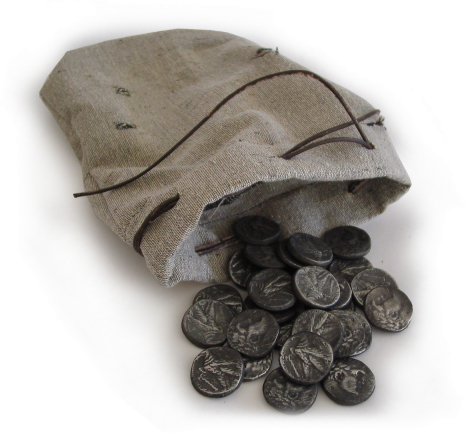
Pieces of Silver - Act 13

Pieces of Silver - Act 13
Connecting the Dots: The Marcellus Natural Gas Play Players – Part 5
By Dory Hippauf